


Our tech team has launched updates to The Nest today. As a result of these updates, members of the Nest Community will need to change their password in order to continue participating in the community. In addition, The Nest community member's avatars will be replaced with generic default avatars. If you wish to revert to your original avatar, you will need to re-upload it via The Nest.
If you have questions about this, please email help@theknot.com.
Thank you.
Note: This only affects The Nest's community members and will not affect members on The Bump or The Knot.
Hospital in weight row after hiring policy bans obese job applicants
Hospital in weight row after hiring policy BANS obese job applicants
PUBLISHED: 01:12 EST, 5 April 2012 | UPDATED: 05:26 EST, 5 April 2012
- Texas hospital is under fire for banning job applicants from employment for being obese.
The Citizens Medical Center in the south eastern town of Victoria requires all potential employees to have a body mass index ? a formula used to determine fat ? of less than 35, according to its CEO.
The figure translates to a weight of 210lbs for someone who is 5ft 5in, and ensures employees fit with a 'specific mental projection of the job of a healthcare professional', the hospital chief, David Brown, said.

Employment policy: The Citizens Medical Center in Victoria, Texas requires all potential employees to have a BMI of less than 35
The Texas Tribune reports job applicants are screened by a physician 'to assess their fitness for work' as part of the hiring process.
Mr Brown told the newspaper the regulation is based largely on 'appearance', rather than fears of high insurance premiums for potentially unhealthy employees.
More...
'The majority of our patients are over 65, and they have expectations that cannot be ignored in terms of personal appearance,' he said.
'We have the ability as an employer to characterize our process and to have a policy that says what?s best for our business and for our patients.'
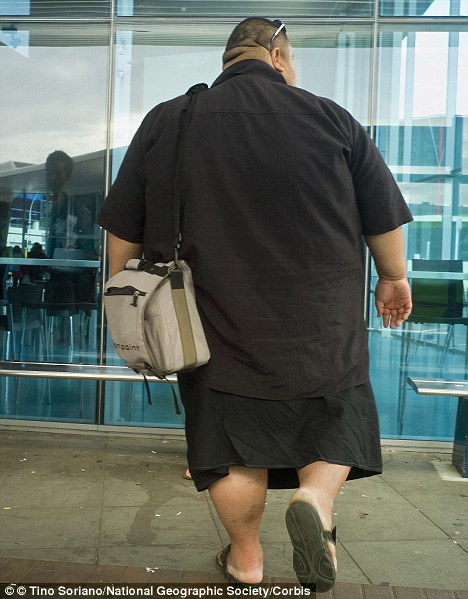
Discrimination? Critics say the hospital is wrongfully turning away talented applicants as a result of the policy
Existing workers who become obese during employment are not terminated, he said.
But applicants have been turned away as a result of the policy, implemented more than a year ago.
'We have some people who are applicants and they know the requirements, and we try and help them get there but they're not interested,' he said. 'So that's fine, they can go work somewhere else.'
THE 'BALONEY MASS INDEX': WHY BMI CAN GIVE FALSE READINGS
The Body Mass Index ? the formula usually used to determine fat ? drastically underestimated how many people should regard themselves as unhealthily overweight or obese.
A study conducted by the Weill Cornell Medical School and the New York state health commissioner concluded that 39 per cent of Americans were being classified as overweight on the basis of their BMI when they were actually obese.
Researchers calculated the BMI ? weight in kg divided by height in metres squared ? of nearly 1,400 adult patients at a private health clinic.
They then compared the results with those of a more sophisticated measurement, a blood test combined with a Dual Energy X-Ray Absorptiometry (DXA) scan, which measures a person?s body fat, muscle mass and bone density.
The comparison found BMI wrongly classified half of the women, and one in four men.
While only 26 per cent of the patients were classed as obese according to BMI, 65 per cent of them fell into that category when measured with the DXA scan.
Study co-author Dr Eric Braverman said BMI should be called the ?baloney mass index? because it was so inaccurate.
Texas does not have laws that prohibit weight discrimination in hiring, although it does prohibit discrimination based on race, age or religion.
But critics say the hospital is misguided by judging health based on BMI alone, as the number does not distinguish between muscle and fat.
Others say employers could miss out on talented candidates as a result of the policy.
Peggy Howell, public relations director for the National Association to Advance Fat Acceptance, told the Tribune: 'This is discrimination plain and simple. So the field of medicine is no longer an option for people of larger body size? What a waste of talent.'
It's not the first time the Citizen Medical Center has been caught up in allegations of discrimination.
In 2007, a memo Brown sent expressing a 'sense of disgust' he felt that more 'Middle-Eastern-born' physicians were demanding leadership roles at the institution prompted claims of racial discrimination, the Tribune reports.
The note became the basis of an ongoing litigation Brown is not at liberty to discuss.
While such a hiring policy is unheard of in the medical field, a 2010 study of 2,000 people by Slimming World found overweight people lose out in the workplace because employers assume they will be lazy.
In the poll of 200 bosses, a quarter of men said they would turn down a candidate purely on their weight and one in 10 admitted they had already done so.
The most overweight people were most likely to dread applying for a new job, and were found to earn less than other staff and are more likely to be bullied or overlooked for promotion.



Re: Hospital in weight row after hiring policy bans obese job applicants
that's one way to keep health insurance costs down.
It doesn't feel right, yet how is this any different than not hiring smokers (which is also legal).
Also I assume that working in a hospital/nursing home is pretty physically demanding (I know a lot of nurses with back injuries) . I know several people who are over weight and in awesome shape, but I don't know anyone who is morbidly obese who could handle a physically demanding job.
Above Us Only Sky
But not all hospital jobs are physically demanding. There are receptionists, medical records, transcription, etc. where the work is primarily done from a desk. I don't see it mentioned in the article if this is for all jobs or just physically demanding jobs.
Also, I'm kind of giving the side-eye to the guy saying it was because of the 65+ year-old patients expecting a certain kind of physical appearance. Does this mean that the next step will be requiring female nurses to wear those old-style white uniforms with the little hats?
I get if they were in a physically demanding job (akin to a firefighter, who has policies on weight) but I'm not sure how this fits into that.
I do agree that hospitals are supposed to be promoting a healthy lifestyle, so a person who is obese may not fit into that, but I really don't think that just banning them is the solution. I mean, if the hospital REALLY wanted to encourage a healthy lifestyle, they;d have nutritious food in the caf, subdidized gym memberships, heck even time in their schedule for workouts.
I'm almost thinking the hospital just doesn't want to have to insure obese employees. ETA: this can't be the case, i realized its in britain.
On the whole, I'm more disturbed by the comments about Middle Eastern-born doctors.
I don't have a problem with weight/health restrictions on employees to the extent they are related to the ability to do the job. Hospitals do indeed have some positions that require extreme physical exertion; I used to have what seemed to be an endless stream of STD and ADA employee issues from my hospital clients streaming from some part of the job that was simply too physical for various employees.
However, instituting this requirement based upon the desire of 65yo patients to see a particular body type is odd and strikes me as quite the slippery slope. I don't understand - will patients start requesting en masse a transfer to another hospital if they don't like the looks of, say, the orderlies?
I agree.
I think this hospital is going to have a hard time recruiting.. it is freaking *(I hope I didn't offend anyone) in East Texas... has anyone ever been there... it is is like walking back into Deliverance in parts. it is incredibly economically depressed and I'd be willing to bet that has higher percentage of obese people than the national average (based on my visits)
Above Us Only Sky
Would this also apply to doctors whose practices are located within a hospital?
I see an endocrinologist whose practice is within a nationally-ranked hospital. He is obese. I'd be really sad if he were to be "banned" because of a policy like this.
Is it wrong that i wouldn't feel comfortable seeing an obese endrocinologist? My endocrinologist has extra wide chairs so her obese patients are comfortable.
Above Us Only Sky
Sorry, you are not 65+ and therefore your opinion on this matter doesn't count.
My employer offers wellness programs, health fairs on site, lunch and learns on weight loss, has a small on site gym, the cafeteria offers some healthy options, and there is a free yoga class once a week after work. These events are poorly attended and I think this is a common problem for employers. The only time I saw people start using programs was when there was the threat of decreased health coverage if your BMI exceeded a certain number.
See, and I don't totally disagree with the insurance companies on this. Obesity adds a LOT of extra potential costs to the insurer based on the conditions that may result (diabetes, heart attack, etc). That being said, I wish that there was a way for companies to encourage the above (working out, etc) without the threat of loss of insurance.
Of course, I disagree with insurance companies being responsible for health care anyway BUT this is what you get when they're in charge.
Employers have experimented with both incentives and disincentives. As examples, for the former, they might offer discounted or free gym memberships, or reduced cost of coverage. For the latter they might use the threat of higher premiums. I haven't read about this in quite some time, but my recollection is that disincentives tend to trigger a greater response than incentives.
A. I didn't read the article b/c this is a drive by nesting
B. Isn't the daily mail tabloid-esque?
I completely believe that. No one likes being threatened, but I did quit smoking when my company was going to charge smokers more for their health insurance. The programs to help me quit were always there, I think, but it took the threat of taking even more money out of my pocket to make me do it.
I think getting people to lower their BMI via the same threat would be harder and maybe even unhealthy. Maybe you can get people to start utilizing the gym or watching their weight to get under some target but most will back slide once they've made that number, only to go on an endless yo-yo dieting cycle every time renewal comes up.
I guess you could institute some more draconian measures where you require a weekly weigh in or a certain number of trips to the gym, but I'd be really uncomfortable with my employer being that involved in my private life on an ongong basis.
Yes.
My Cooking Blog